IVF Treatment in Ahmedabad | MAA Women’s Hospital & IVF Center
Starting a family is a special journey, but fertility challenges can sometimes make conception difficult. With advancements in reproductive medicine, IVF Treatment (In Vitro Fertilization) has become an important option for couples seeking medical assistance to achieve pregnancy.
MAA Women’s Hospital & IVF Center provides fertility-related healthcare with a focus on personalized treatment planning, medical guidance, and compassionate patient support. Whether you are exploring fertility options for the first time or considering advanced reproductive treatments, consulting an experienced fertility specialist can help you understand the next steps.
If you are searching for an IVF Center in Ahmedabad, understanding the treatment process, available procedures, and factors affecting fertility can help you make informed decisions.
1. What Is IVF Treatment and How Does It Help You Conceive?
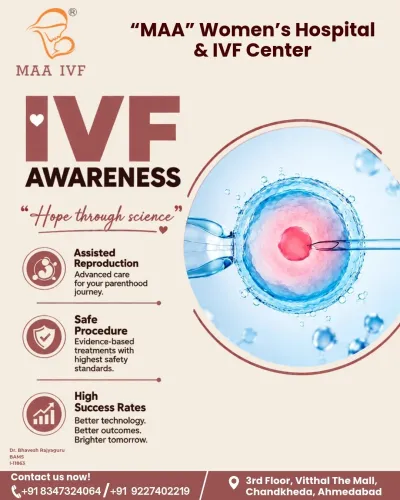
IVF Treatment is an assisted reproductive technology (ART) in which eggs and sperm are combined in a specialized laboratory to achieve fertilization. The resulting embryo may then be transferred into the uterus to achieve pregnancy.
IVF may be considered for individuals and couples experiencing different fertility challenges, including:
· Blocked or damaged fallopian tubes.
· Male-factor infertility.
· Ovulation disorders.
· Endometriosis.
· Unexplained infertility.
· Certain age-related fertility concerns.
· Previous unsuccessful fertility treatments.
A fertility specialist evaluates medical history and diagnostic reports before recommending IVF or another suitable treatment.
2. How Does the IVF Treatment Process Work?
The IVF process involves several stages, each carefully planned based on the patient’s medical condition.
Step 1: Initial Fertility Consultation
The process begins with a consultation to understand reproductive health, previous medical history, and fertility concerns. Doctors may recommend blood investigations and ultrasound examinations.
Step 2: Ovarian Stimulation
Fertility medications are prescribed to stimulate the ovaries to develop multiple eggs. Doctors monitor the response through ultrasound scans and blood tests when needed.
Step 3: Egg Retrieval
Once the eggs are ready, a medical professional collects them through a procedure under appropriate supervision.
Step 4: Fertilization in the Laboratory
The collected eggs are combined with sperm in a specialized laboratory. Depending on individual circumstances, the clinic may recommend conventional IVF or ICSI.
Step 5: Embryo Development
Fertilized eggs are monitored during their development. The fertility team evaluates embryo development to determine the next appropriate step.
Step 6: Embryo Transfer
The fertility team may transfer a selected embryo into the uterus. A pregnancy test is performed after the recommended waiting period to check the treatment outcome.
3. Who Should Consider IVF Fertility Treatment?
IVF may be recommended when natural conception becomes difficult due to specific reproductive health conditions.
· Some common situations include:
· Women with blocked fallopian tubes.
· Couples experiencing male-factor infertility.
· Women with certain ovulation-related conditions.
· Individuals diagnosed with endometriosis.
· Couples experiencing unexplained infertility.
· Couples who have not achieved pregnancy through previous treatments.
Not everyone experiencing fertility difficulties requires IVF. A specialist can recommend suitable options based on individual test results and medical requirements.
4. Why Is Personalized IVF Treatment Important?
Every fertility journey is different. Age, ovarian reserve, reproductive health, sperm quality, and previous treatment history can influence fertility treatment decisions.
Personalized IVF Fertility Treatment helps specialists develop an approach based on individual medical needs.
At MAA Women’s Hospital & IVF Center, the focus is on:
· Individual fertility assessments.
· Appropriate treatment recommendations.
· Medical guidance throughout the process.
· Patient education and counseling.
· Support at each stage of fertility treatment.
Understanding the available options helps couples make informed decisions about their reproductive health.
5. Which Advanced Fertility Procedures Are Used in IVF Treatment?
Modern reproductive medicine offers different procedures to address specific fertility concerns.
Depending on the patient’s condition, treatment may involve:
· Conventional IVF: Eggs and sperm are placed together in a laboratory environment to facilitate fertilization.
· ICSI (Intracytoplasmic Sperm Injection): A single sperm is injected directly into an egg. This procedure may be recommended in selected cases of male-factor infertility or previous fertilization difficulties.
· Embryo Culture: Fertilized eggs are monitored as they develop into embryos under controlled laboratory conditions.
· Embryo Transfer: A selected embryo is transferred into the uterus as part of the IVF process.
· The suitability of these procedures depends on medical evaluation and the fertility specialist’s recommendations.
6. How to Choose the Right IVF Center in Ahmedabad?
Choosing a fertility center is an important decision for couples planning to undergo fertility treatment. Before selecting an IVF Center in Ahmedabad, consider the following factors:
· Qualified Fertility Specialists: Check the qualifications and experience of the treating doctors.
· Laboratory Facilities: Understand the available IVF laboratory infrastructure and procedures.
· Personalized Treatment: Look for treatment plans tailored to your medical needs.
· Transparent Guidance: Discuss treatment stages, expected costs, risks, and possible outcomes.
· Patient Support: Consider whether counseling and medical assistance are available.
· Treatment Monitoring: Understand how progress is monitored throughout the IVF cycle.
These factors can help couples evaluate their options and choose appropriate fertility care.
7. Comprehensive Women’s Healthcare at MAA Women’s Hospital
Women’s healthcare involves more than fertility treatment. Access to appropriate medical guidance at different life stages is equally important.
MAA Women’s Hospital & IVF Center, located in Chandkheda, Ahmedabad, focuses on women’s healthcare and fertility-related medical services.
For women and families searching for a Women’s Hospital in Ahmedabad, Women’s Hospital in Motera, or a Maternity Hospital in Gandhinagar, the hospital offers a place to explore relevant women’s healthcare services.
Whether you are planning a pregnancy, seeking fertility consultation, or exploring maternity care, professional medical advice can help you understand your healthcare needs.
8. When Should You Consult a Fertility Specialist?
· Consider consulting a fertility specialist if:
· You have been trying to conceive without success.
· You have irregular menstrual cycles.
· You have a known reproductive health condition.
· You have experienced repeated pregnancy losses.
· You have previously undergone unsuccessful fertility treatment.
· You want to understand your fertility health before planning pregnancy.
Women under 35 are generally advised to seek an infertility evaluation after 12 months of trying to conceive, while women aged 35 or older should consider evaluation after 6 months. Earlier consultation may be appropriate when known fertility-related conditions are present.
Frequently Asked Questions (FAQs)
Q1. What is IVF treatment, and how does it help couples conceive?
IVF is an assisted reproductive treatment in which eggs and sperm are combined in a laboratory. A resulting embryo may be transferred into the uterus to help achieve pregnancy.
Q2. Who should consider IVF treatment?
Couples experiencing blocked fallopian tubes, male-factor infertility, endometriosis, ovulation disorders, unexplained infertility, or certain other fertility challenges may consider IVF after medical consultation.
Q3. How long does one IVF treatment cycle take?
An IVF cycle commonly takes approximately 4–6 weeks from the beginning of ovarian stimulation to the pregnancy test. The actual timeline may vary depending on the treatment protocol and individual circumstances.
Keywords