Why Are Regular Postpartum Checkups Important for New Mothers?
A baby's arrival brings happiness, excitement, and new responsibilities. While caring for a newborn is a priority, a mother’s physical and emotional health after childbirth deserves equal attention. Regular postpartum checkups help new mothers recover safely, identify potential health concerns early, and receive professional guidance during the weeks following delivery.
At Maa Women’s Hospital, maternal healthcare supports women through every stage of their motherhood journey. Regular postpartum appointments can help mothers understand their recovery, manage breastfeeding challenges, monitor emotional well-being, and make informed decisions about nutrition, physical activity, and family planning.
If you are looking for a Postpartum Checkup in Ahmedabad or reliable Postnatal Care in Gandhinagar, understanding the importance of follow-up care is an essential first step toward a healthier recovery.
What Are Postpartum Checkups?
Postpartum checkups are medical appointments scheduled after childbirth to assess a mother’s physical recovery, emotional health, and overall well-being. These visits help healthcare professionals evaluate healing after vaginal or cesarean delivery and identify concerns that may require medical attention.
Postpartum care is an ongoing process, not a single appointment. The American College of Obstetricians and Gynaecologists (ACOG) recommends contact with an obstetric care provider within the first three weeks after birth, followed by ongoing care as needed and a comprehensive postpartum assessment no later than 12 weeks after delivery.
The recommended schedule may vary depending on the mother’s medical history, delivery experience, and recovery needs.
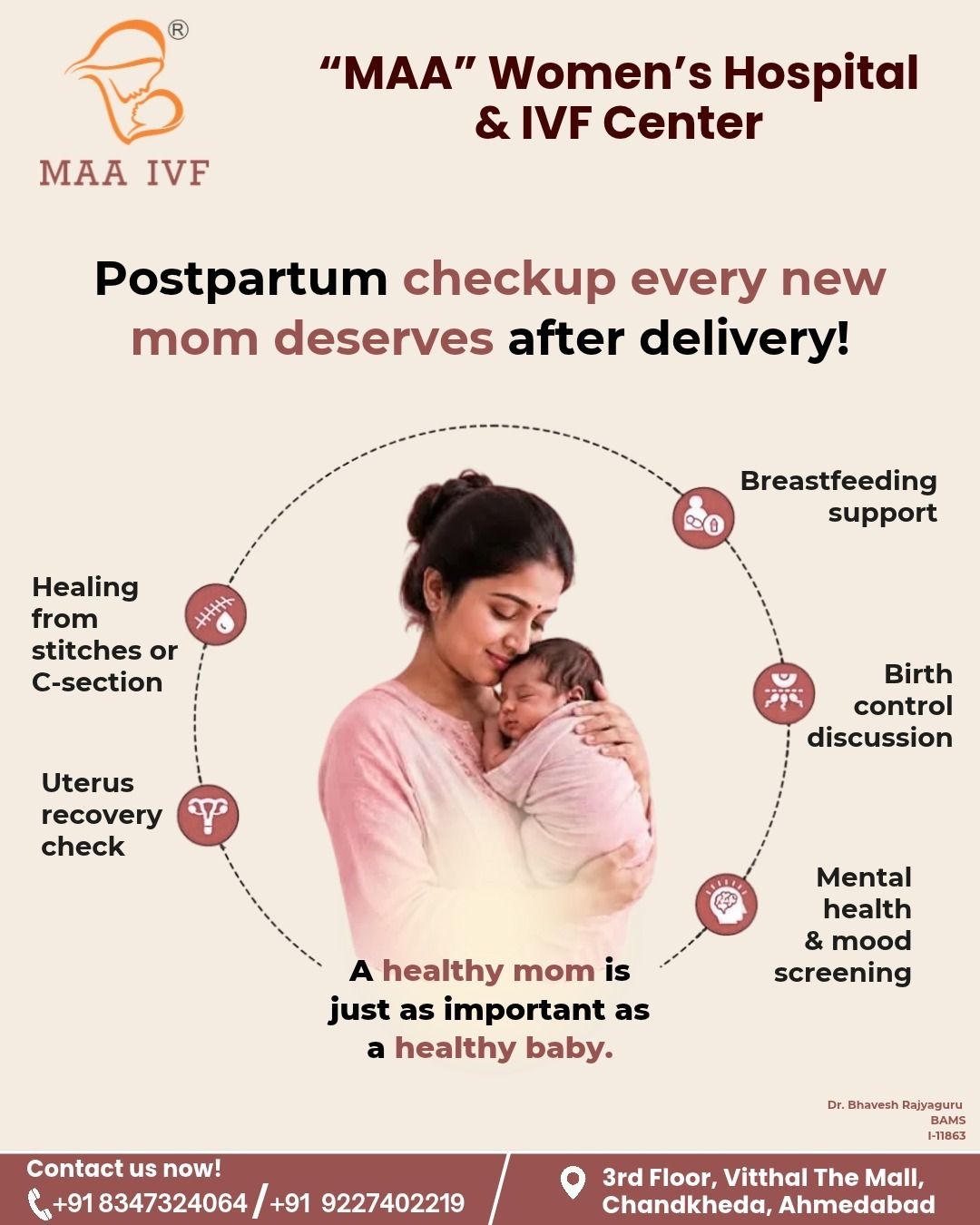
A postpartum checkup may include:
- Assessing recovery after vaginal or cesarean delivery.
- Checking blood pressure and other health indicators when appropriate.
- Reviewing postpartum bleeding, pain, and wound healing.
- Screening for postpartum depression and anxiety.
- Discussing breastfeeding and infant feeding concerns.
- Guiding nutrition, rest, and physical activity.
- Discussing contraception and future pregnancy planning.
Choosing a trusted Women’s Hospital in Motera can help mothers access professional guidance and follow-up care during this important recovery period.
Why Are Regular Postpartum Checkups Important?
1. Monitor Physical Recovery After Childbirth
Pregnancy and childbirth significantly change the body. After delivery, the uterus gradually returns to its pre-pregnancy size, hormone levels fluctuate, and childbirth-affected tissues begin to heal.
Postpartum appointments allow healthcare providers to assess recovery and discuss persistent pain, unusual bleeding, urinary difficulties, or concerns about a cesarean incision or vaginal tears.
Women recovering from a complicated delivery may need additional assessments or treatment. Following personalised medical advice can help mothers gradually and safely resume their usual activities.
2. Identify Postpartum Complications Early
Certain medical complications can develop after childbirth, even when pregnancy and delivery have been uncomplicated.
Postpartum checkups help healthcare providers assess concerns such as high blood pressure, infections, anaemia, and other conditions requiring attention.
Women who experienced pregnancy-related hypertension or preeclampsia may need earlier blood pressure monitoring and additional follow-up. Prompt medical assessment helps identify warning signs and determine the appropriate treatment.
Important: Seek urgent medical care for heavy bleeding, chest pain, difficulty breathing, severe or persistent headaches, vision changes, severe abdominal pain, or thoughts of harming yourself or your baby. Do not wait for a scheduled appointment if these symptoms occur.
3. Receive Breastfeeding and Infant Feeding Support
Breastfeeding can take time to establish, and some mothers experience challenges during the first few weeks.
Common concerns include difficulty with latching, nipple pain, breast engorgement, and worries about milk supply. During postpartum visits, healthcare professionals can discuss these concerns and, when appropriate, recommend a qualified lactation consultant.
Mothers who use formula or combine breastfeeding with formula feeding can also seek guidance about feeding choices and their own recovery needs.
Professional support can help mothers make informed decisions without unnecessary stress or guilt.
4. Support Mental and Emotional Well-Being
Emotional health is essential to postpartum recovery. Hormonal changes, interrupted sleep, physical discomfort, and the responsibilities of caring for a newborn can affect a mother’s mood.
Some women experience temporary mood changes, while others develop postpartum depression or anxiety that may require professional support.
Regular postpartum checkups provide an opportunity to discuss persistent sadness, excessive worry, difficulty bonding with the baby, or feeling overwhelmed. Healthcare professionals may recommend mental health screening, counselling, or treatment according to individual needs.
Seeking support is an important part of caring for both mother and baby.
5. Improve Nutrition and Manage Fatigue
Adequate nutrition, hydration, and rest support recovery after childbirth. New mothers may experience fatigue because of interrupted sleep, blood loss during delivery, breastfeeding demands, or low iron levels.
Postpartum appointments can help women understand their nutritional needs, including balanced meals, iron-rich foods, hydration, and supplements when medically indicated.
Mothers with a history of anaemia or significant blood loss may need further evaluation or blood tests. Personalised advice can help support energy levels and recovery.
6. Discuss Family Planning and Contraception
Family planning is an important part of postnatal care. Ovulation may occur before the first menstrual period returns, so pregnancy can be possible even when menstruation has not resumed.
During a postpartum checkup, mothers can discuss suitable contraception options based on their health, preferences, and breastfeeding status.
Healthcare providers can also address questions about resuming sexual activity, managing discomfort, and planning future pregnancies.
7. Monitor Existing Health Conditions
Some women need additional monitoring after delivery because of health conditions that existed before pregnancy or developed during it.
These may include diabetes, thyroid disorders, hypertension, and other chronic conditions.
For example, women who experienced gestational diabetes may need postpartum glucose testing to assess blood sugar levels and future diabetes risk. Mothers who had pregnancy-related high blood pressure may also require continued monitoring.
Regular follow-up helps coordinate postpartum care with ongoing medical treatment when necessary.
8. Get Advice on Exercise, Rest, and Daily Activities
Many mothers want to return to their normal routines soon after delivery, but recovery times vary.
Postpartum checkups provide an opportunity to discuss gradually increasing physical activity, pelvic floor exercises, wound care, lifting restrictions, and returning to work.
Healthcare providers can also offer practical guidance on managing fatigue and getting help with household responsibilities and newborn care.
Following individualised recommendations can support a comfortable and appropriate return to daily activities.
When Should You Schedule Postpartum Checkups?
Postpartum care should be personalised according to each mother’s health, delivery experience, and recovery.
Time after childbirth
Purpose of follow-up
Within the first 3 weeks
Initial contact with a maternal healthcare provider to review recovery and discuss concerns
During the following weeks
Additional visits based on symptoms, medical history, and individual needs
By 12 weeks after delivery
Comprehensive assessment of physical, emotional, and reproductive health
Women with certain complications may need earlier care. For example, those with severe high blood pressure may require assessment within 72 hours after delivery, while women with pregnancy-related hypertension generally need blood pressure evaluation within 7–10 days, or sooner when clinically indicated.
Always follow your treating healthcare professional’s instructions, particularly if you experienced complications during pregnancy or delivery.
Who Should Pay Special Attention to Postnatal Care?
Although postpartum follow-up is important for every mother, additional monitoring may be recommended for women who:
- Had a cesarean delivery or significant vaginal tears.
- Experienced high blood pressure or preeclampsia.
- Had gestational diabetes or anaemia.
- Experience persistent pain, unusual bleeding, or concerns about wound healing.
- Have breastfeeding difficulties.
- Experience anxiety, persistent low mood, or emotional distress.
- Have existing medical conditions that require continued monitoring.
If you need Postpartum Care in Chandkheda or maternal follow-up near Motera, consult a qualified healthcare provider to determine the right care schedule for your recovery.
Why Choose Maa Women’s Hospital for Maternal Healthcare?
The postpartum period is an important stage of a woman’s healthcare journey. Appropriate medical guidance can help mothers understand their recovery, recognise potential concerns, and receive support for their physical and emotional well-being.
Maa Women’s Hospital supports women’s healthcare needs through appropriate medical consultation and personalised guidance. Mothers can discuss postpartum recovery, breastfeeding concerns, family planning, and follow-up requirements with their healthcare provider.
For families seeking Maternal Healthcare in Ahmedabad, choosing a suitable hospital means considering qualified medical professionals, accessibility, follow-up arrangements, and care tailored to individual needs.
Contact Maa Women’s Hospital to enquire about postpartum consultation availability and recommended follow-up care.
Frequently Asked Questions About Regular Postpartum Checkups
1. Why are regular postpartum checkups important?
Regular postpartum checkups help monitor physical recovery, identify potential complications, assess emotional well-being, and guide breastfeeding, nutrition, contraception, and daily activities.
2. When should I have my first postpartum checkup?
ACOG recommends contacting your obstetric care provider within the first three weeks after delivery, with ongoing care as needed and a comprehensive assessment no later than 12 weeks. Your provider may recommend an earlier visit based on your health.
3. Are postpartum checkups necessary after a normal delivery?
Yes. Even after an uncomplicated vaginal delivery, follow-up care can help assess healing, bleeding, blood pressure when appropriate, emotional health, and other recovery concerns.
Keywords