How Can IVF Treatment Help Couples Achieve Their Dream of Parenthood?
Starting a family is an important journey, but some couples may experience difficulties conceiving naturally. Medical advances in reproductive science have introduced several fertility treatment options that can help individuals and couples understand and address fertility challenges.
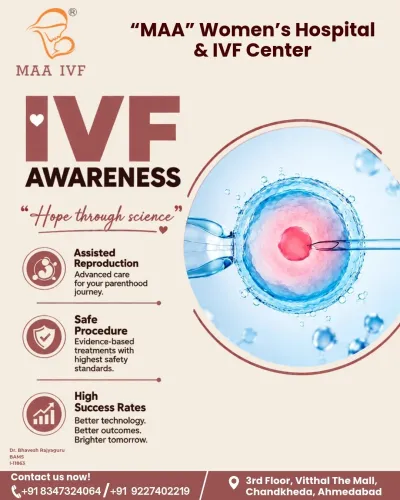
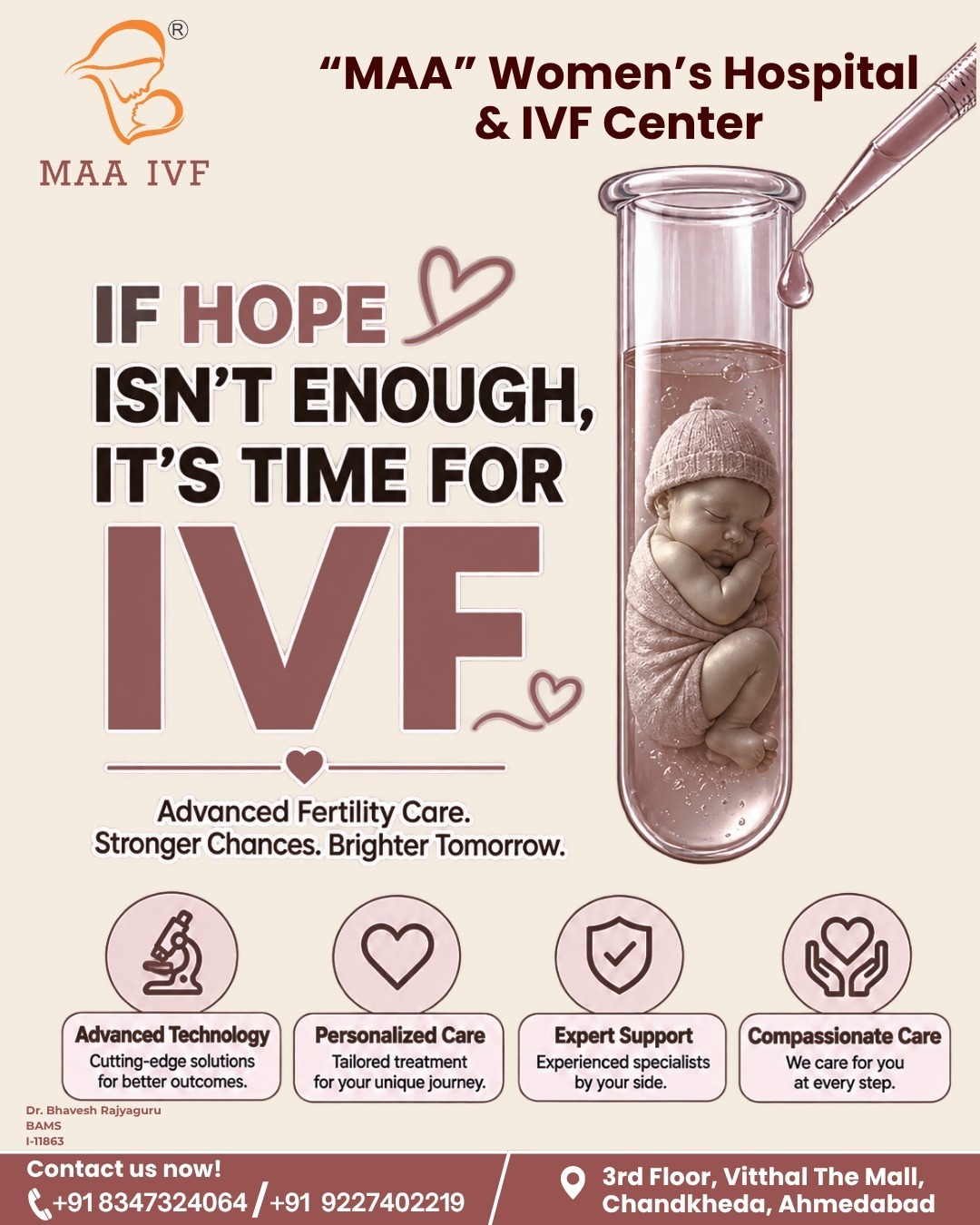
IVF (In Vitro Fertilization) is one of the established assisted reproductive technologies used to help achieve pregnancy. It involves fertilizing an egg with sperm in a laboratory and transferring a resulting embryo into the uterus.
At MAA Women’s Hospital & IVF Center, individuals and couples can explore fertility care options with medical evaluation and guidance. If you are searching for an IVF Center in Ahmedabad, understanding the treatment process, eligibility, and important considerations can help you make an informed decision.
What Is IVF Treatment?
IVF Treatment is a medical procedure in which eggs are collected from the ovaries and combined with sperm in a specialized laboratory. If fertilization occurs, doctors monitor the resulting embryos as they develop. Doctors may then transfer a suitable embryo into the uterus.
IVF may be considered for different fertility-related conditions, depending on the medical history and test results of both partners.
People looking for Fertility Treatment in Ahmedabad should first consult a fertility specialist to understand the possible causes of difficulty conceiving and identify suitable treatment options.
How Does the IVF Treatment Process Work?
An IVF cycle involves several stages. The exact treatment plan and timeline may vary depending on the patient’s health and response to medication.
1. Fertility Evaluation and Consultation
The first step involves evaluating both partners. A fertility specialist may recommend:
· Medical history assessment
· Hormone blood tests
· Ultrasound examination
· Ovarian reserve assessment
· Semen analysis
· Additional investigations when required
These assessments help the specialist understand possible fertility concerns and recommend an appropriate treatment plan.
2. Ovarian Stimulation
Medications stimulate the ovaries to develop multiple mature eggs. The patient’s response is monitored through ultrasound scans and blood tests.
3. Egg Retrieval
When the eggs are ready, doctors collect them from the ovaries through a medical procedure, usually performed under sedation or anesthesia, as appropriate.
4. Fertilization in the Laboratory
The collected eggs are combined with sperm in a specialized laboratory. Depending on the clinical situation, doctors may recommend conventional IVF or ICSI (Intracytoplasmic Sperm Injection).
5. Embryo Development and Monitoring
After fertilization, embryology professionals monitor embryos under controlled laboratory conditions. Embryologists assess their development to determine the next treatment step.
6. Embryo Transfer
A selected embryo may be transferred into the uterus through a medical procedure. The fertility specialist provides instructions for follow-up and recommends when to take a pregnancy test.
Who May Need IVF Treatment?
IVF may be considered for individuals or couples experiencing certain fertility-related conditions, including:
· Blocked or Damaged Fallopian Tubes: When the fallopian tubes prevent the egg and sperm from meeting naturally.
· Male Factor Infertility: Certain sperm-related concerns may affect natural fertilization.
· Ovulation Disorders: Irregular or absent ovulation can make conception difficult.
· Endometriosis: This condition may affect reproductive health and fertility.
· Unexplained Infertility: When investigations do not identify a clear reason for difficulty conceiving.
· Age-Related Fertility Challenges: Fertility can change with age, affecting egg quantity and quality.
· Previous Unsuccessful Fertility Treatments: IVF may be considered after other approaches have not resulted in pregnancy.
Not everyone experiencing infertility requires IVF. A fertility specialist should assess both partners before recommending treatment.
What Are the Potential Benefits of IVF Treatment?
IVF offers an established treatment option for certain fertility conditions. Depending on individual circumstances, potential benefits include:
Fertilization Under Laboratory Conditions
Fertilization takes place in a controlled laboratory environment, allowing doctors to monitor embryos during early development.
Treatment for Different Fertility Concerns
IVF may help address several reproductive challenges, including tubal and certain male-factor infertility conditions.
Embryo Development Monitoring
The clinical team can monitor embryos during development to help guide treatment decisions.
Additional Fertility Options
Where medically appropriate, options such as embryo freezing may be discussed for possible future use.
Individualized Treatment Planning
Treatment protocols can be adjusted based on age, medical history, test results, and response to medication.
Important: IVF does not guarantee pregnancy. Outcomes vary depending on factors such as age, egg and sperm quality, embryo development, and underlying medical conditions. IVF can also involve physical, emotional, and financial considerations that should be discussed with the treating specialist.
How to Choose the Right IVF Center in Ahmedabad?
Choosing a fertility center is an important decision. Patients should look beyond location and consider the quality of medical guidance, transparency, and suitability of the treatment plan.
Before selecting an IVF Center in Ahmedabad, consider these factors:
· Qualified Fertility Specialists: Check the qualifications and relevant experience of the treating doctors.
· Diagnostic Facilities: Understand the availability of investigations needed for fertility evaluation.
· Laboratory Facilities: Ask about the embryology laboratory and its quality-control practices.
· Treatment Transparency: Ensure the clinic explains procedures, risks, timelines, and expected costs.
· Personalized Counseling: Look for clear communication and treatment discussions based on individual medical needs.
· Follow-Up Care: Understand how monitoring and follow-up appointments are managed.
Couples comparing an IVF Hospital in Gandhinagar or a fertility clinic in Ahmedabad should choose a facility that meets their medical needs and provides clear information throughout the treatment journey.
Fertility Care at MAA Women’s Hospital & IVF Center
MAA Women’s Hospital & IVF Center is a point of contact for individuals and couples exploring women’s healthcare and fertility treatment options.
Whether you are researching an IVF Center in Motera, looking for Fertility Care in Chandkheda, or comparing options for a Women’s Hospital in Ahmedabad, start with a proper medical consultation.
Discuss your fertility concerns, previous medical history, and treatment expectations with a qualified specialist. This can help you understand your options and decide on next steps.
Frequently Asked Questions About IVF Treatment
Q1. What is IVF Treatment, and how does it help with pregnancy?
IVF is an assisted reproductive technology in which eggs and sperm are combined in a laboratory. A resulting embryo may be transferred into the uterus to help achieve pregnancy.
Q2. How long does one IVF cycle take?
A typical fresh IVF cycle may take approximately four to six weeks from the start of ovarian stimulation to pregnancy testing. The actual timeline can vary depending on the treatment protocol and whether additional procedures are required.
Q3. Is IVF Treatment painful?
Experiences vary between patients. Ovarian stimulation may cause bloating or discomfort, while egg retrieval is generally performed with sedation or anesthesia. Some patients may experience mild cramping afterward. The treating doctor can explain what to expect.
Keywords